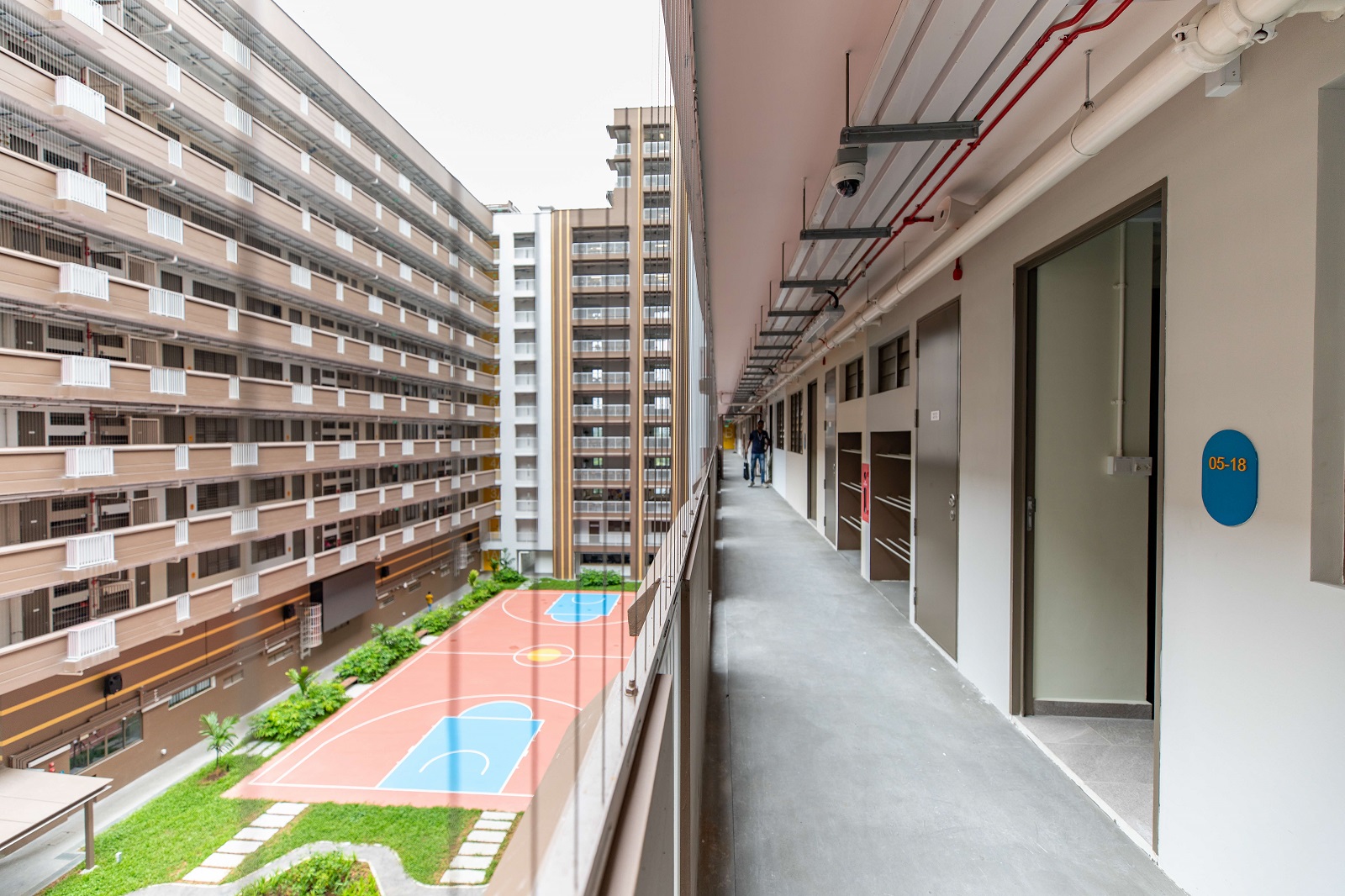
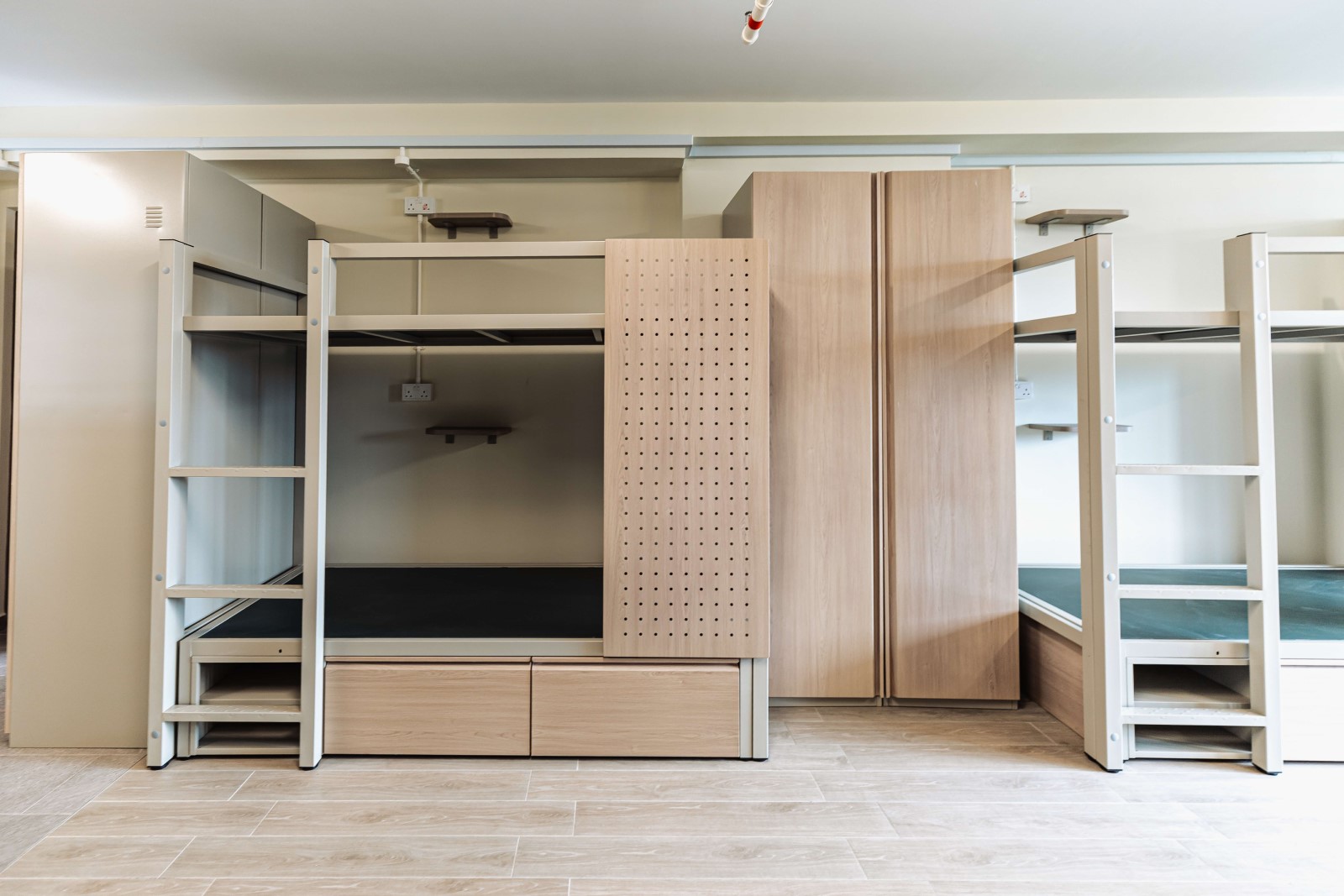
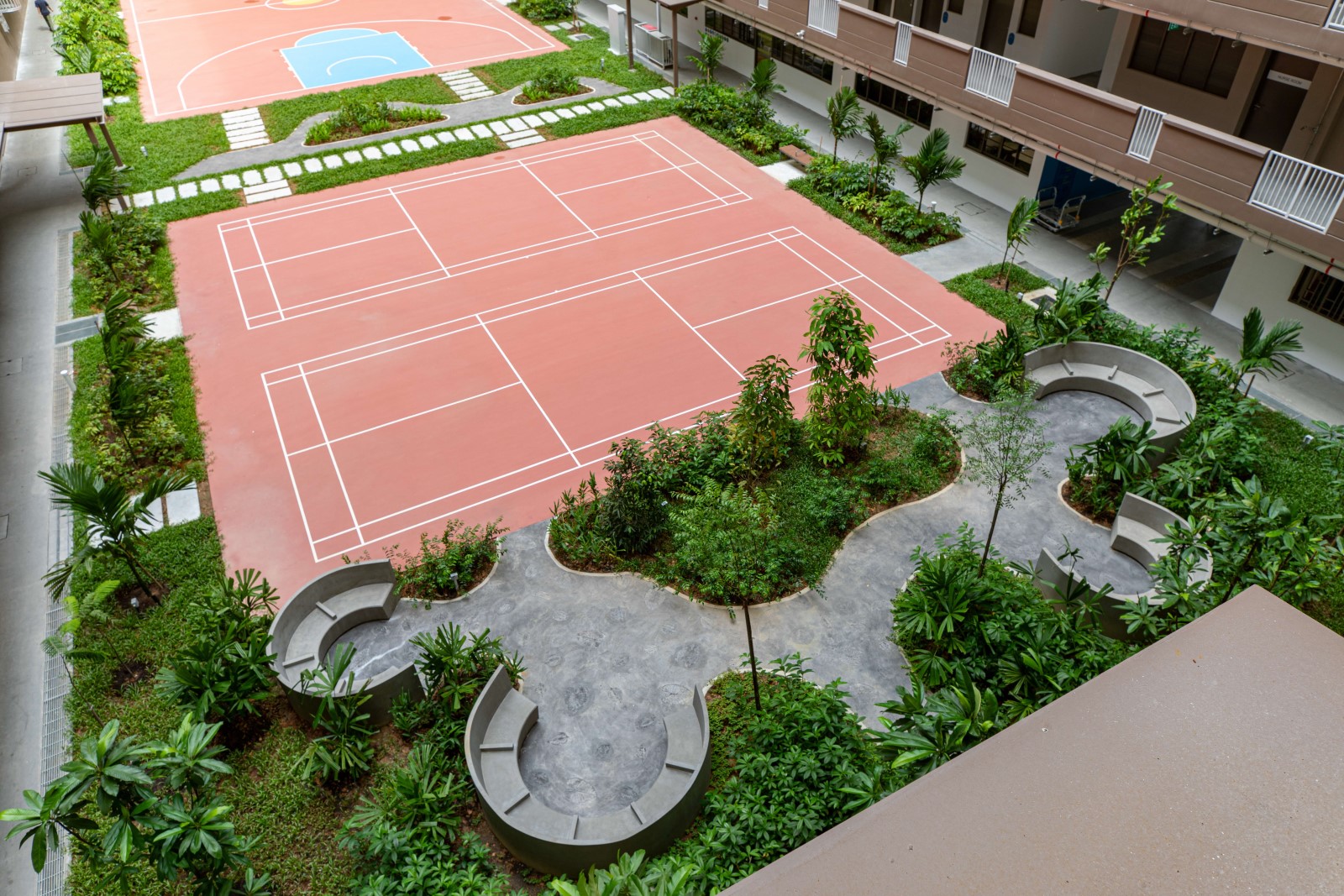
When the 2,400-bed NESST Tukang Dormitory officially opens its doors, its residents will find more than just a place to sleep. Rooms that are orientated largely along the north-south axis to optimise natural ventilation aligned to Singapore’s prevailing wind direction. Privacy nooks for video calls home. En-suite service yards where workers can wash and dry their own laundry. A central courtyard designed for recreation and community building.
Singapore's first government-owned Purpose-Built Dormitory (PBD) aims to demonstrate what's possible: well-designed, cost-efficient housing that provides enhanced living standards for migrant workers. Set up by the Ministry of Manpower as a response to lessons learned during COVID-19, NESST Tukang Dormitory represents a renewed commitment to worker welfare — a tangible model of how government can lead by example.
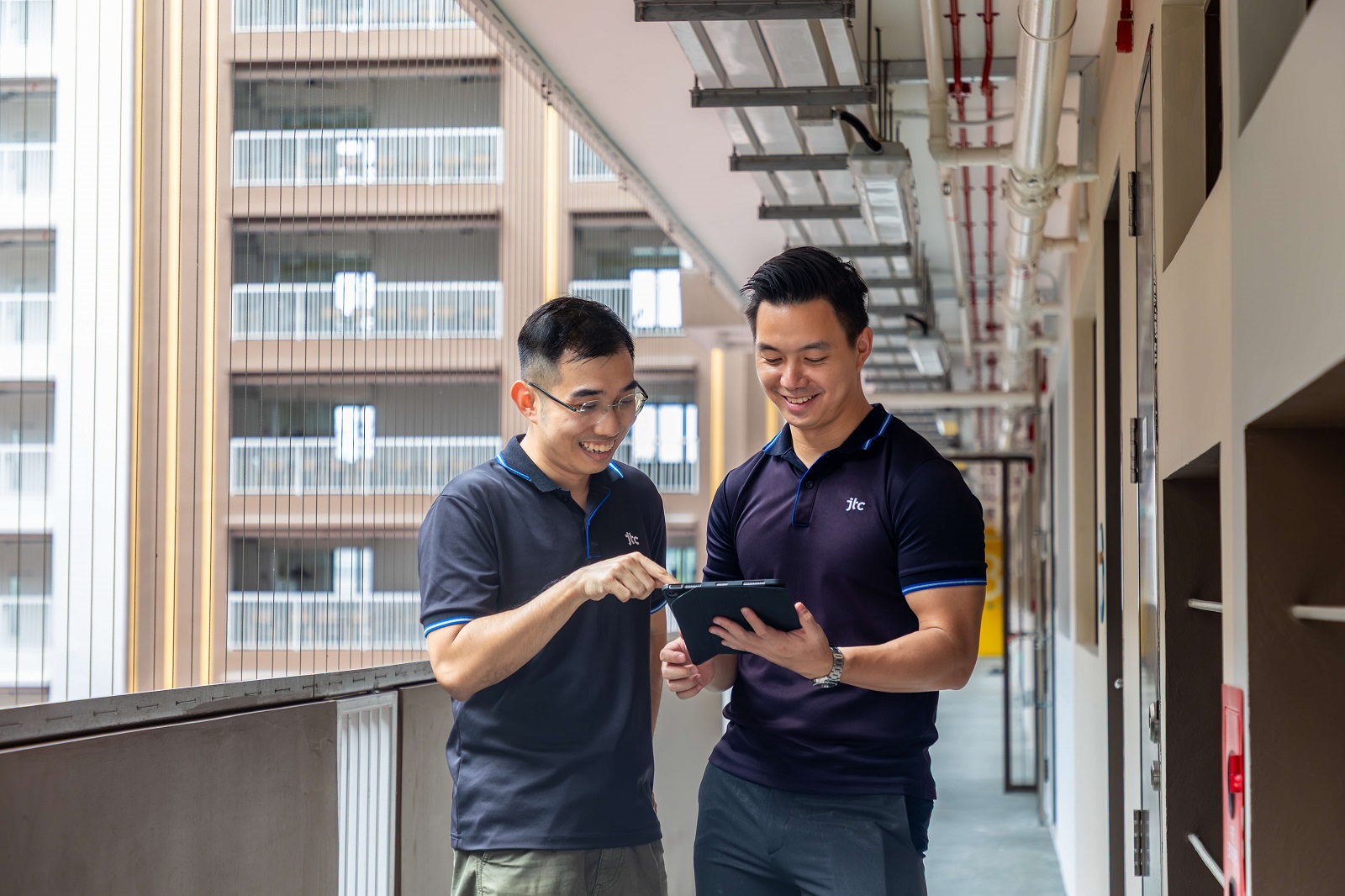
Behind this achievement is a dedicated JTC team that worked tirelessly together with project partners to deliver the facility 10 weeks ahead of schedule — an outcome that the team is incredibly proud of. Part of the JTC team is Ng Kang Raye, a senior project manager, who drove project delivery, and Goh Kwang Yi, a senior architect, who drove design innovation.
The pair’s involvement in NESST Tukang Dormitory via JTC’s role as Building & Infrastructure Centre of Excellence (B&I CentEx) represents something larger than a single project. This specialised division is designed to deliver complex public infrastructure that many agencies find challenging to manage on their own.
Building capability, delivering infrastructure
B&I CentEx was established in 2016 through a partnership between the Ministry of Finance and JTC. The premise was straightforward: many government agencies undertake development projects only occasionally. They lack in-house built environment expertise. They're exploring requirements, figuring out what they need, without the technical depth to translate operational requirements into construction specifications.
B&I CentEx bridges that gap. “It is a team effort. We put ourselves in the agency's shoes to help them realise their visions”, Kang Raye explains.
JTC provides the project managers, architects, engineers, and contract managers to handle technical complexities. The team ensures designs comply with building regulations, meet user requirements, and deliver realistic cost and schedule projections. They manage consultants and contractors, facilitate procurement, and oversee construction quality and safety. Throughout the process, they worked closely with MOM to ensure the final facility serves its intended purpose.
The model addresses a persistent challenge in public sector infrastructure: how can Singapore build specialised facilities efficiently to serve Singaporeans well? Sports facilities, integrated developments, one-of-a-kind learning facilities, viaducts, conserved buildings, worker dormitories — each requires specific expertise. B&I CentEx offers the solution: centralised technical capability to support these development projects.
The scale of operations reflects the demand. B&I CentEx currently manages over $10 billion in public projects across 15 ministries and agencies. For each project, the approach remains consistent: understand what the agency needs, manage the technical delivery, and create a facility that works.
Design that responds
NESST Tukang Dormitory began with a mission in mind. How do we create a dormitory of the future, where workers can be well taken care in? The journey included close collaboration with stakeholders across the spectrum of the industry. That led to the re-imagination of workers’ dormitory spaces and setting the standard for workers dormitories in the future.
NESST Tukang Dormitory's site presented both constraints and opportunities. Like most Singapore developments, land was limited. The site configuration, however, allowed an innovative approach: a single-loaded corridor design wrapping around a central courtyard, with bedrooms on one side of the corridor only.
This choice unlocked multiple benefits. Each bedroom achieves cross-ventilation through windows on opposite ends, improving natural airflow and thermal comfort. Workers looking out from their rooms see the courtyard below – watching sports, observing community life. Recreation zones cluster around this central space, creating what Kwang Yi describes as “visual connection and engagement that hopefully will build a stronger community”.
“It is gratifying to see the vision in our original artist's impression from 2022 starting to come to life now”, he adds. The design also considers the street experience. The northern half of the block facing the public street was intentionally lowered, creating a more approachable building scale for pedestrians. Those floors were redistributed to the opposite side – same footprint, same room count, better urban integration.
Some features went beyond baseline requirements. The en-suite service yards weren't mandated by dormitory standards, yet the team added them anyway. The reasoning: workers should be able to wash and dry clothes in their own space, with privacy and convenience. These decisions reflect principles that guided the entire design: liveability, resiliency, and sustainability.
Cross-ventilation serves both pandemic resilience and energy efficiency. Passive design leverages prevailing winds to improve ventilation, reduce mechanical cooling needs and mitigate viral transmission. Community spaces encourage social connection. Each choice balances practical constraints with quality-of-life considerations.
“This project is unique because it is the first dormitory built by the government to show the industry they can build something well-designed and liveable in a cost-efficient manner”, Kang Raye emphasises.
Managing complexity
Technical expertise becomes most visible when things get complicated. Throughout NESST Tukang Dormitory's construction, design changes emerged as operational requirements evolved. Accommodating these changes while maintaining schedule and budget required constant coordination.
“As with most other developments in Singapore, our constraint is always land”, Kwang Yi notes. The team needed to maximise density while preserving liveability. They had to ensure regulatory compliance while incorporating feedback from operators on resident needs. They balanced architectural vision with construction realities.
The team translated evolving requirements into technical specifications like structural loading, power provisions, plumbing systems, then incorporated them into tender documents and construction schedules. They coordinated interfaces between technical requirements, construction logistics, and user needs. They maintained quality standards while adapting to operational adjustments.
Throughout this process, strong partnerships made the difference. The contractor, BHCC, and consultant, Surbana Jurong, worked closely with the B&I CentEx team, MOM and NESST to navigate challenges and find solutions. This collaborative approach enabled the project to not merely meet its deadline, but finish 10 weeks early, without budget overruns or compromised quality.
For Kang Raye, successful project delivery means understanding what the client wants and delivering it with good governance and efficiency. “In this case, we delivered a liveable and beautiful space migrant workers want to live in, and a dorm of the future that MOM and NESST is proud of”.
A model for the future
NESST Tukang Dormitory adds to a growing portfolio of specialised public infrastructure delivered across government. Each project builds institutional knowledge about managing complex, multi-stakeholder developments.
As NESST Tukang Dormitory prepares to welcome its first residents, the project offers a glimpse of how public infrastructure can be delivered in Singapore: with technical rigor, design thoughtfulness, and a clear focus on the people who will use it every day.