For most of the past century, attracting industry came down to three things: land, power, and connectivity. Those still matter. But they have become the easiest part of the conversation.
The harder question is whether a place can offer something no single asset delivers on its own: a network of partners able to create value together.
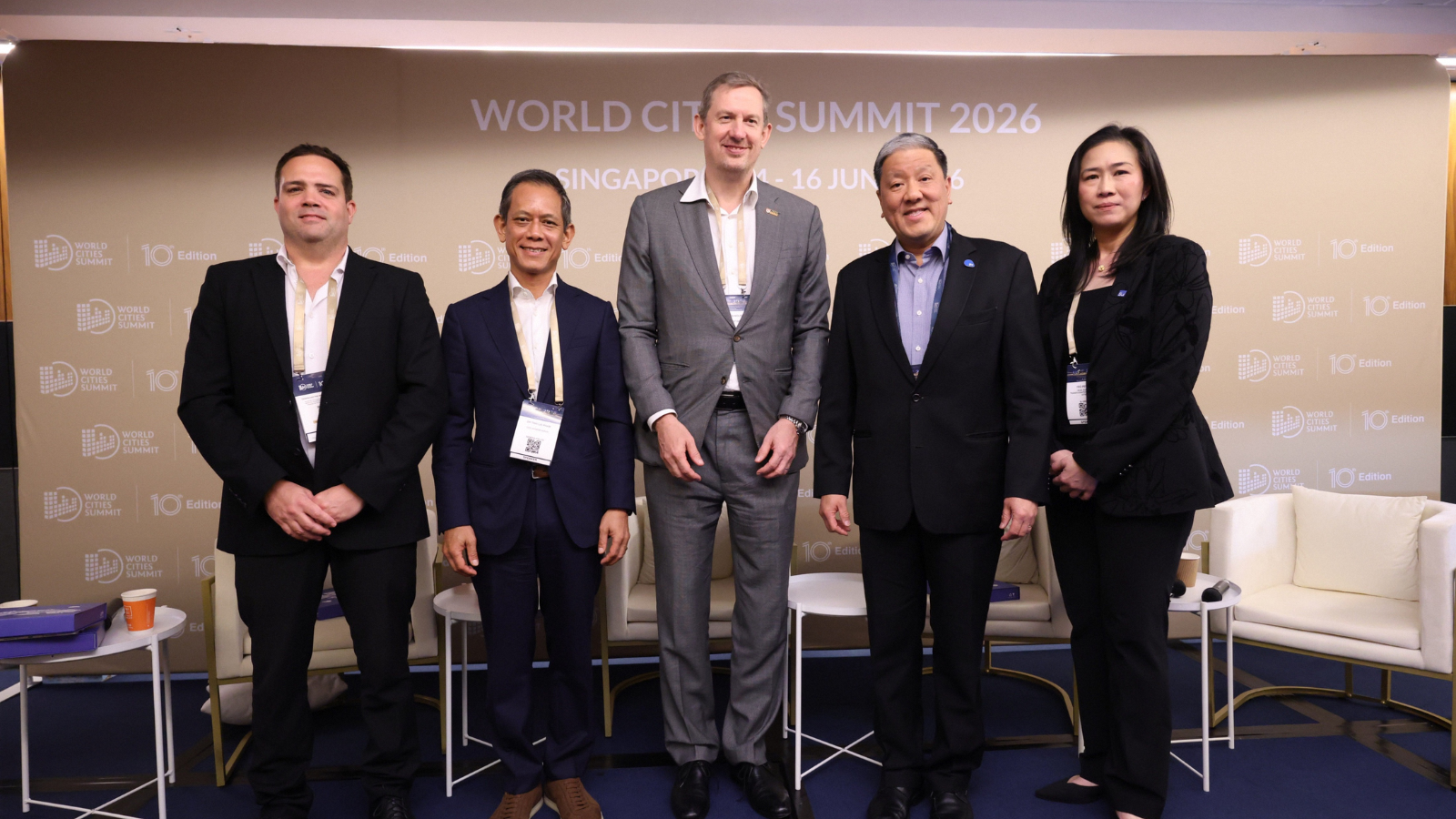
This was the thread running through a cross-sector panel at the World Cities Summit 2026, which gathered voices from industrial development, academia, municipal planning, and global manufacturing. The panel did not converge on a single model, but it did share one recognition. The defining challenge of the next generation of industrial ecosystems is no longer how to build them. It is how to make the relationships within them work.
Infrastructure is the baseline, not the differentiator
The physical foundations still matter, and they remain central to what we do. Accessible land, reliable utilities, efficient logistics, and robust digital infrastructure are the conditions without which no serious investment conversation begins.
But they are the baseline rather than the differentiator. A district can be well-serviced, well-located, and well-built, and still fail to generate the exchange of ideas and talent that distinguishes a working ecosystem from a collection of tenants who happen to share an address.
When we developed Punggol Digital District, the decision to place a university, a business park, and a full range of civic amenities on one compact campus was not an aesthetic one. It rested on a straightforward conviction: that proximity, properly structured, generates the everyday encounters from which new ideas emerge. The same thinking shaped our Open Digital Platform there, which allows previously separate building and city systems to communicate, so that a new solution need only connect once to reach the rest.
Genuine cross-sector collaboration is where most districts falter
If proximity is the easier half of the problem, alignment is the harder one, and it is where good intentions most often falter.
Industry, academia, and government operate on different timescales and answer to different incentives. Businesses respond to market cycles, universities to research and teaching calendars, and public agencies to policy horizons. These rhythms rarely align on their own.
A company seeking a quick research partner meets an academic calendar built around term dates. A university with real expertise meets a partner reluctant to share the commercial context that would make joint work worthwhile. Both want collaboration in principle, yet neither has always reshaped its own processes to make it possible in practice. As one of our fellow panellists observed, after years of university and industry partnerships, the difficulty lies not in wanting to collaborate, but in building the interface where each side can change the other.
Closing that gap takes more than encouragement. It takes structures built for the purpose, which give partners a shared environment on terms each can accept. At Jurong Innovation District, advanced manufacturing companies, a university, and national research institutions work alongside one another through corporate laboratories that pool resources and share risk, and through testbeds where partners can experiment openly within a protected setting.
Sometimes the intervention is far simpler. At Punggol Digital District, a hotel tender required the operator to host student interns, so that those studying nearby could learn in the morning and work in the afternoon without leaving campus. What these measures have in common is a recognition that the planner and developer have a role in convening that extends well beyond the provision of space.
Designing for change, not just stability
Designing for resilience adds a further layer to this thinking, and it asks us to plan differently. A resilient district is not one that resists change, but one that can absorb disruption and reconfigure as technologies, supply chains, and workforce needs evolve.
The implication runs deeper into governance than into design. A district planned around a single industry, fixed in place by rigid zoning and long approval cycles, optimises for a present that will not last. The more durable approach is to plan for a future that remains uncertain, with land-use rules flexible enough to accommodate industries that do not yet exist, and planning cycles responsive enough to adapt when they arrive.
When we moved goods movement underground to the District Logistic Network at Jurong Innovation District and returned the ground level to people, the lasting value lay less in the engineering than in the flexibility it created, allowing the space to be used differently as needs change.
A model worth sharing beyond Singapore
What this asks of organisations that plan and develop industrial land is the discipline to hold two ambitions at once: to build for the present with rigour, and to design for the future with humility. We cannot know with certainty which industries will anchor our districts in 20 years. We can, however, build the conditions of openness, connection, and adaptability that will make those districts worth choosing.
This is not a Singapore story alone. The principle beneath it, that the connections a place makes possible matter as much as the assets it can offer, holds for any city prepared to act on it. It is the approach we are taking, and one we believe travels.